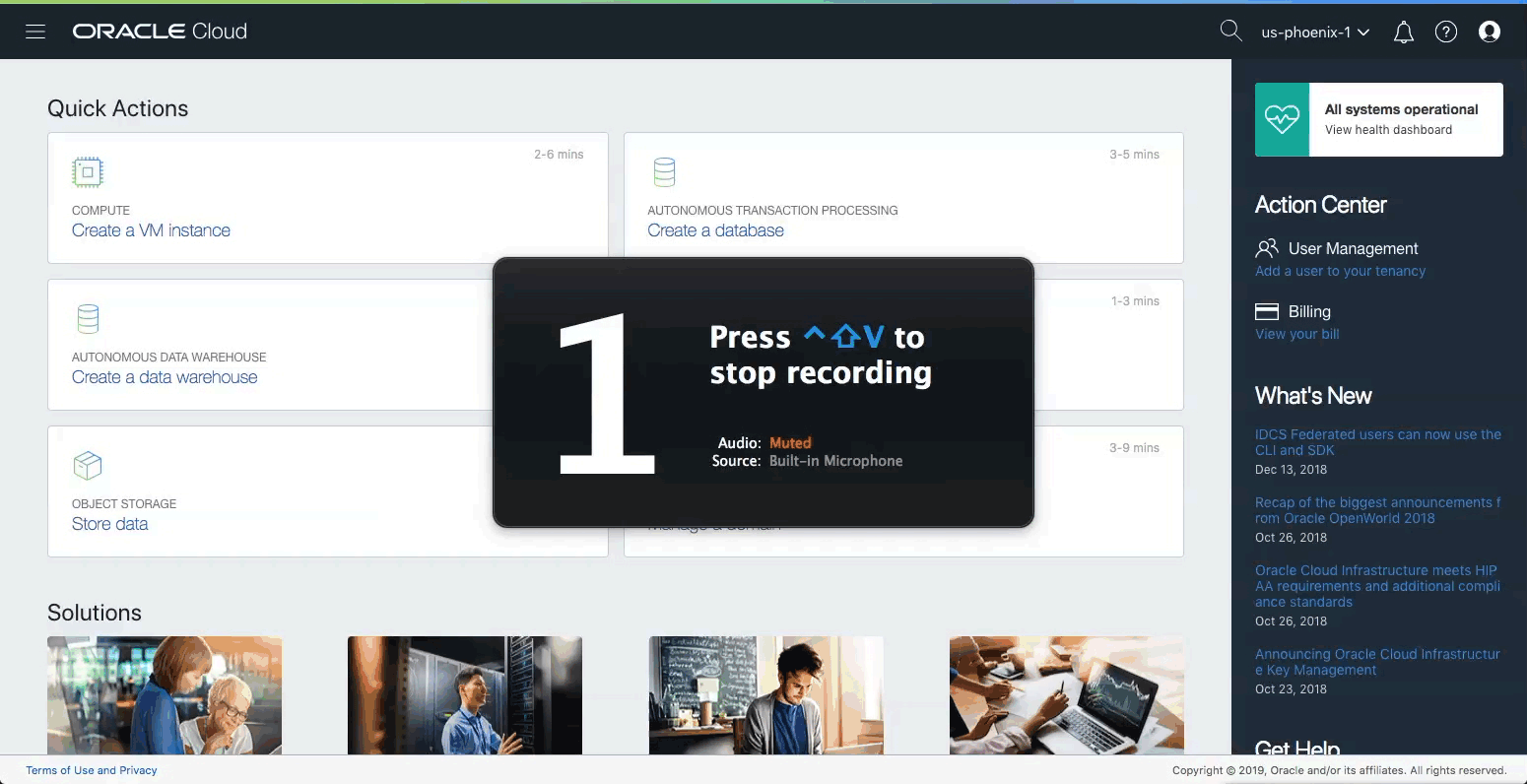
Oracle Functions: Serverless On Oracle Cloud - Developer's Guide To Getting Started (Quickly!)
An intro to Oracle Functions, our hosted serverless offering.


Today I conducted the first of what I hope to be an ongoing series of one-on-one, podcast-style chats with interesting folks in the developer community. I thought it only appropriate that my first chat would be with my good friend and long time mentor Raymond Camden. We talked about everything from his new job, to Java, NodeJS and even discussed movies, TV and answered the age old question of “Is cereal soup?”.

The other day a few friends and I were trying to help one of our group troubleshoot why he was seeing some moisture around his air conditioning unit. During the group chat, one of the people in the group mentioned that he has a simple moisture alarm near his unit to alert him to these kinds of situations before they become a real problem. I thought that was a great idea, and the next day I decided to try and build something like that myself instead of shelling out eleven whole dollars to purchase one. Seeing as how I have a closet full of things like Raspberry Pi’s, Arduino, sensors, wires, resistors, capacitors and the like I figured that I certainly had enough parts on hand to whip something together. Here’s what I came up with:

In this series, we’re taking a look at how microservice applications are built. In part 1 we learned about the new open source framework from Oracle called Helidon and learned how it can be used with both Java and Groovy in either a functional, reactive style or a more traditional Microprofile manner. Part 2 acknowledged that some dev teams have different strengths and preferences and that one team in our fictional scenario used NodeJS with the ExpressJS framework to develop their microservice. Yet another team in the scenario chose to use Fn, another awesome Oracle open source technology to add serverless to the application architecture. Here is an architecture diagram to help you better visualize the overall picture: